Intellectual property protection law governs rights associated with trademarks, inventions, designs, creative works, and other intellectual assets that may represent a significant part of a business’s value. For companies, protecting these rights is not limited to preventing imitation. It can also protect brand identity, content, innovations, and intangible assets that support the company’s operations and commercial position.
Effective protection begins with identifying the type of intellectual property involved, understanding how the relevant rights arise, determining whether registration is required, documenting ownership, and regulating use through appropriate agreements. Intellectual property should therefore be treated as part of a company’s broader asset and legal risk management strategy rather than an issue considered only after a dispute occurs.
Summary of key points
| Topic | Key point |
|---|---|
| What Is Intellectual Property? | Intellectual property refers to a range of legal rights associated with creations of the mind, innovations, trademarks, and other intangible assets. |
| Key takeaways | Intellectual property refers to a range of legal rights associated with creations of the mind, innovations, trademarks, and other intangible assets. |
| Protecting Innovations, Designs, and Creative Works | A company may own several types of intellectual property at the same time. |
| The Role of Intellectual Property Protection Law in Preventing Imitation | Intellectual property protection law establishes mechanisms through which rights holders may challenge certain forms of unauthorised use, copying, or imitation. |
| Registering Intellectual Property to Strengthen Legal Protection | Registration can be an important element in protecting certain intellectual property rights, depending on the type of right and applicable legal framework. |
| What Should You Do If Your Intellectual Property Rights Are Infringed? | When unauthorised use of a trademark, design, content, or another intellectual asset is discovered, the first step should generally be to document the suspected infringement and preserve available evidence before taking |
What Is Intellectual Property?
Intellectual property refers to a range of legal rights associated with creations of the mind, innovations, trademarks, and other intangible assets. Depending on the nature of the work and the applicable legal framework, these may include copyright, trademarks, patents, industrial designs, and other forms of intellectual property.
The scope of protection and the way rights are acquired differ between categories. Certain rights may arise from the creation of the work itself, while others depend more significantly on registration and completion of the required legal procedures.
Why Is Intellectual Property Protection Law Important for Companies?
Intellectual property protection law provides a framework through which companies can organise ownership of intellectual assets, commercially exploit them, and prevent unauthorised use where the requirements for legal protection are satisfied.
This becomes particularly important when a company’s value depends on its brand name, trademarks, software, designs, content, or technology. Failing to organise these rights from the beginning can make establishing ownership or challenging unauthorised use more complicated later.
Types of Intellectual Property Rights
Key takeaways
- Intellectual property refers to a range of legal rights associated with creations of the mind, innovations, trademarks, and other intangible assets.
- Not all intellectual assets are protected in the same way.
- A company may own several types of intellectual property at the same time.
- Intellectual property protection law establishes mechanisms through which rights holders may challenge certain forms of unauthorised use, copying, or imitation.
- Registration can be an important element in protecting certain intellectual property rights, depending on the type of right and applicable legal framework.
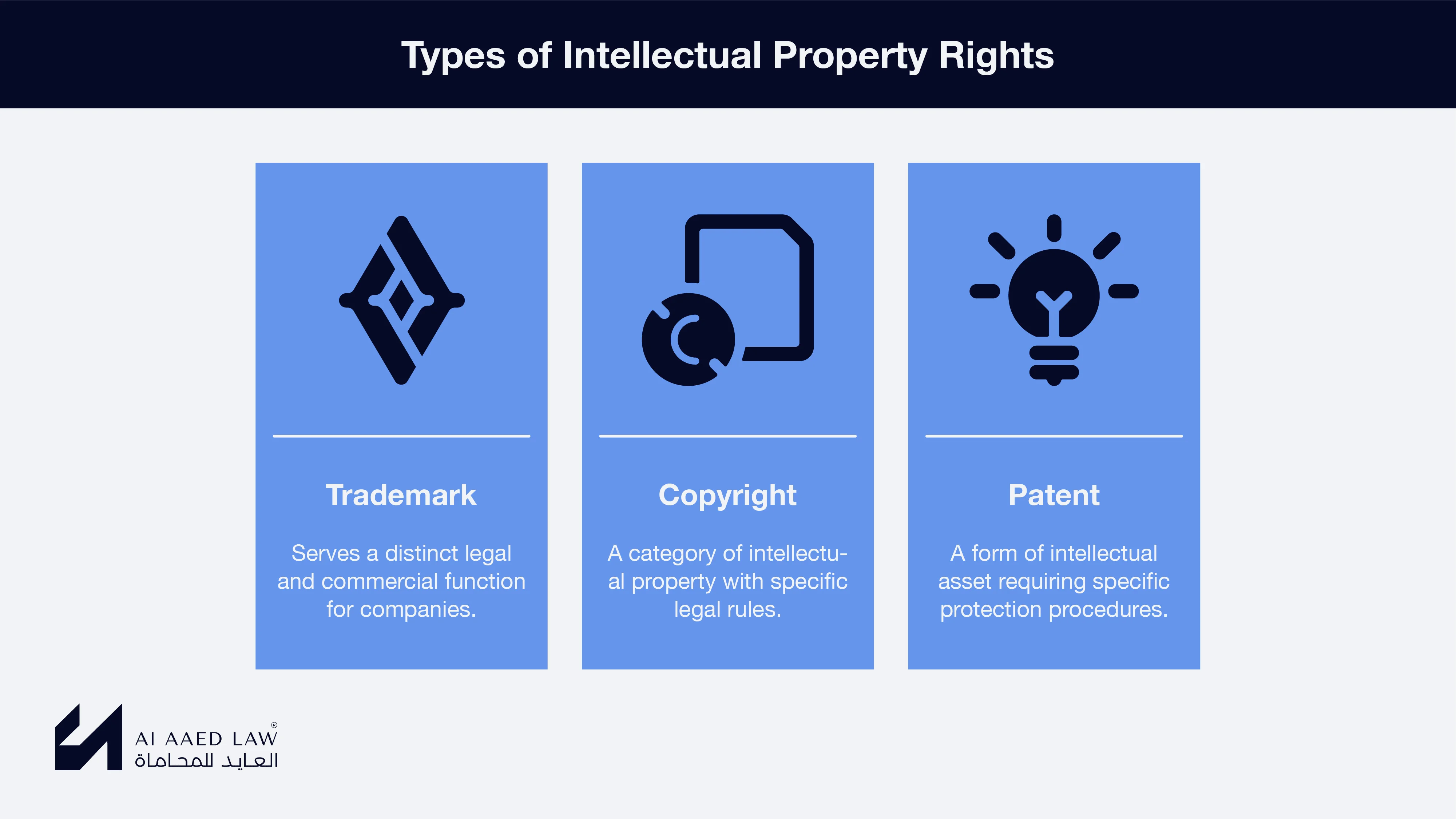
Not all intellectual assets are protected in the same way. Identifying the type of right involved is the first step towards understanding the rules that apply and the procedures that may be necessary to protect it. Companies should distinguish between different categories of intellectual property because a trademark, for example, serves a different legal and commercial function from copyright or a patent.
Copyright and Industrial Property
Copyright generally relates to creative works, such as written content, images, certain artistic works, software, and other works that satisfy the relevant requirements for protection. Industrial property covers areas such as trademarks, patents, industrial models, and designs.
Understanding this distinction helps determine the appropriate protection strategy. The steps required to protect a commercial name or logo may differ considerably from those required for software, an invention, or an industrial design.
Protecting Trademarks and Trade Names
A trademark is used to distinguish the goods or services of one business from those of others. Depending on applicable rules, it may consist of a name, logo, or other elements that distinguish the business or its products in the market.
Registering a trademark, where available and legally appropriate, can strengthen the owner’s legal position. Businesses should also consider checking existing rights before adopting a new name or brand identity to reduce the risk of disputes with earlier rights holders.
Protecting Innovations, Designs, and Creative Works
A company may own several types of intellectual property at the same time. It may have a trade name, registered trademarks, original designs, software, marketing content, and a technical innovation, each potentially subject to different forms of protection.
Businesses should therefore avoid relying on a single protection method for all intellectual assets. Each asset should be identified and assessed to determine the appropriate legal framework and protection process.
Protecting Patents and Industrial Designs
Patent protection relates to inventions that satisfy the legal requirements for protection. Obtaining a patent will generally involve formal procedures and an assessment of whether the invention meets the applicable conditions.
Industrial models and designs relate to certain aspects of a product’s design or appearance. Businesses should assess these assets before public disclosure or commercial use to determine the appropriate form of protection and any steps necessary to preserve their rights.
Protecting Designs, Logos, and Creative Content
Designs, logos, photographs, written materials, visual content, and digital works can all represent important business assets. However, they may not all receive protection under the same legal category. Copyright, trademark rights, and other protections can sometimes overlap depending on the nature and use of the asset.
Businesses should therefore document who created the work, when it was created, and who owns the relevant rights, particularly when the content or design was produced by an employee, freelancer, agency, or external contractor.
The Role of Intellectual Property Protection Law in Preventing Imitation
Intellectual property protection law establishes mechanisms through which rights holders may challenge certain forms of unauthorised use, copying, or imitation. This protection can be commercially important where imitation creates confusion among customers, takes advantage of a brand’s reputation, or involves the unauthorised use of creative work.
However, the ability to take effective action can also depend on proving the existence, scope, ownership, and date of the relevant right. Preventing infringement is therefore closely connected with registration, documentation, and contractual protection.
Intellectual Property Rights in Commercial Agreements
Commercial agreements should clearly identify who owns intellectual property that existed before the relationship began and who will own work, inventions, or other assets developed while the agreement is being performed.
This is particularly important in software development, design, marketing, consulting, and research and development agreements. Paying for work does not necessarily mean that every intellectual property right has automatically transferred to the customer. Ownership, licensing, permitted use, and transfer of rights should therefore be addressed expressly in the contract.
Registering Intellectual Property to Strengthen Legal Protection
Registration can be an important element in protecting certain intellectual property rights, depending on the type of right and applicable legal framework. It can help document a claim to the right, identify its owner, and establish the scope of the registered protection.
Registration requirements differ between intellectual property categories. A company should therefore identify the asset it wants to protect before determining whether registration is required or beneficial, which authority is responsible, and what procedures and deadlines apply.
Proving Ownership of an Idea, Work, or Design
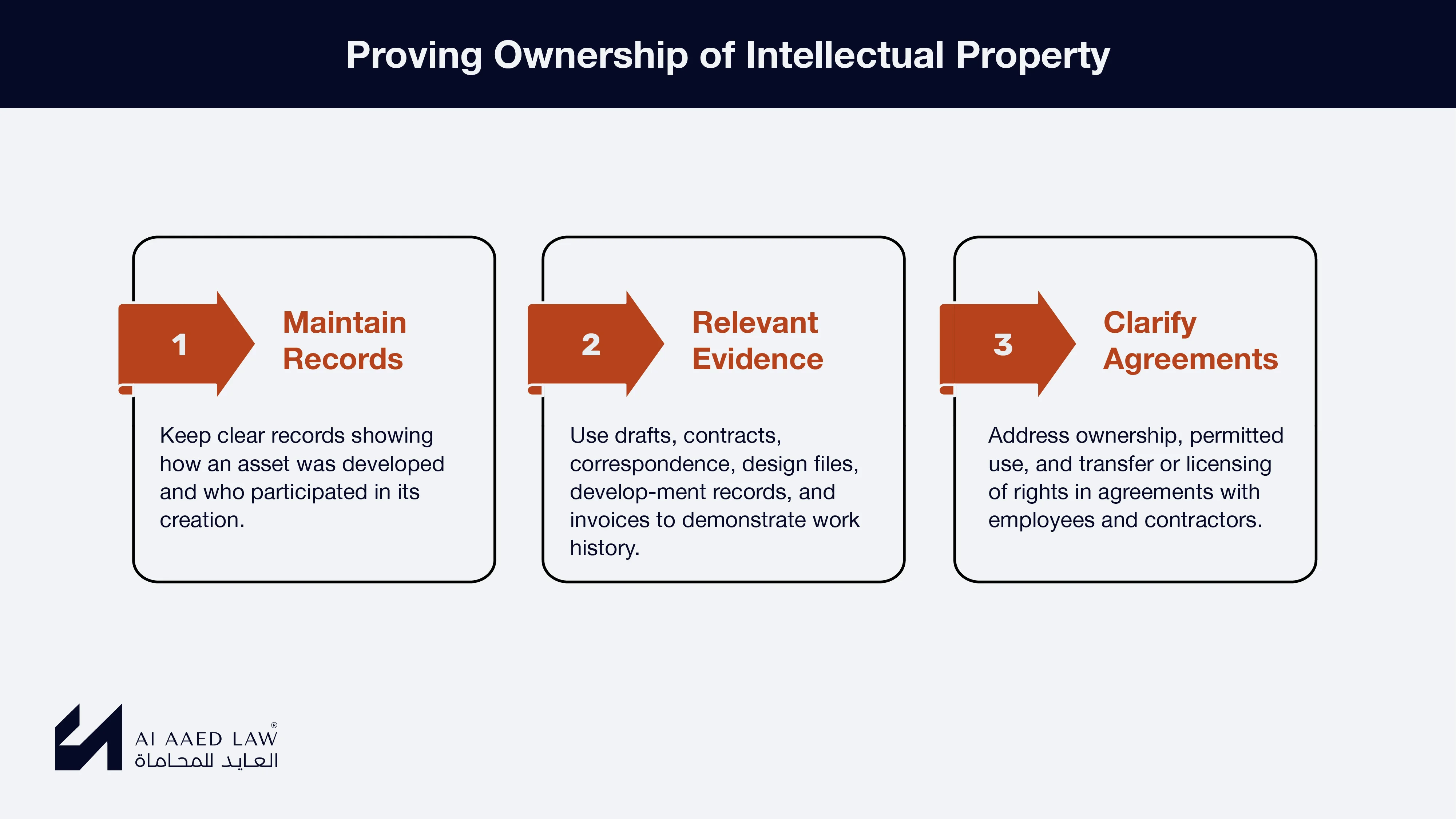
Establishing ownership begins with maintaining clear records showing how an asset was developed and who participated in its creation. Relevant evidence may include drafts, contracts, correspondence, design files, development records, invoices, and other documents that help demonstrate the history of the work and the relationship between the parties.
Where an employee, contractor, freelancer, or external company creates the work, the relevant agreement should clearly address ownership, permitted use, and any transfer or licensing of intellectual property rights.
What Should You Do If Your Intellectual Property Rights Are Infringed?
When unauthorised use of a trademark, design, content, or another intellectual asset is discovered, the first step should generally be to document the suspected infringement and preserve available evidence before taking action that could result in the content being removed or altered.
The rights holder should then assess the nature and scope of the right, the available protection, the identity of the other party, and how the asset is being used. The appropriate response will depend on the circumstances, so the same enforcement strategy may not be suitable for every type of infringement.
Initial Steps After Discovering an Infringement
Initial steps may include collecting evidence, verifying registration details or other documents establishing ownership, and reviewing relevant contracts. The appropriate legal response can then be considered based on the nature of the infringement.
In some situations, formal communication or a request to stop the unauthorised use may be appropriate. Other cases may require court proceedings or different legal remedies. The appropriate course will depend on the right involved, the extent of the harm, and the circumstances of the dispute.
Intellectual Property in Startups and Digital Businesses
Intellectual property may be among the most valuable assets of startups and digital businesses, particularly where a company relies on software, an application, an online platform, digital content, a brand, or internally developed technology.
These rights should be organised from the early stages of the business. The involvement of new founders, investors, employees, freelancers, or external developers can make ownership significantly more complicated if appropriate agreements are not already in place.
Ownership of Work Created by Employees and Freelancers
Companies should clearly determine the rights associated with work created by employees or independent contractors while performing their responsibilities. Paying for the work alone should not be assumed to resolve every intellectual property ownership issue in every situation.
Contracts can address ownership, usage rights, transfer of rights, confidentiality, and the treatment of pre-existing materials or tools. These provisions are particularly important for software development, design, content production, and digital products.
Common Mistakes That Can Put Intellectual Property Rights at Risk
Common mistakes include delaying the registration of rights that require or benefit from registration, failing to document the development of an asset, engaging designers or developers without clear agreements, disclosing sensitive information without confidentiality protections, and assuming that possession of a file or payment for its creation automatically means ownership of all associated rights.
Problems may also arise when a business adopts a trademark or trade name without checking for earlier rights or uses photographs, fonts, software, designs, or other content without confirming the relevant licensing terms.
How Can a Company Avoid Infringing Other Parties’ Rights?
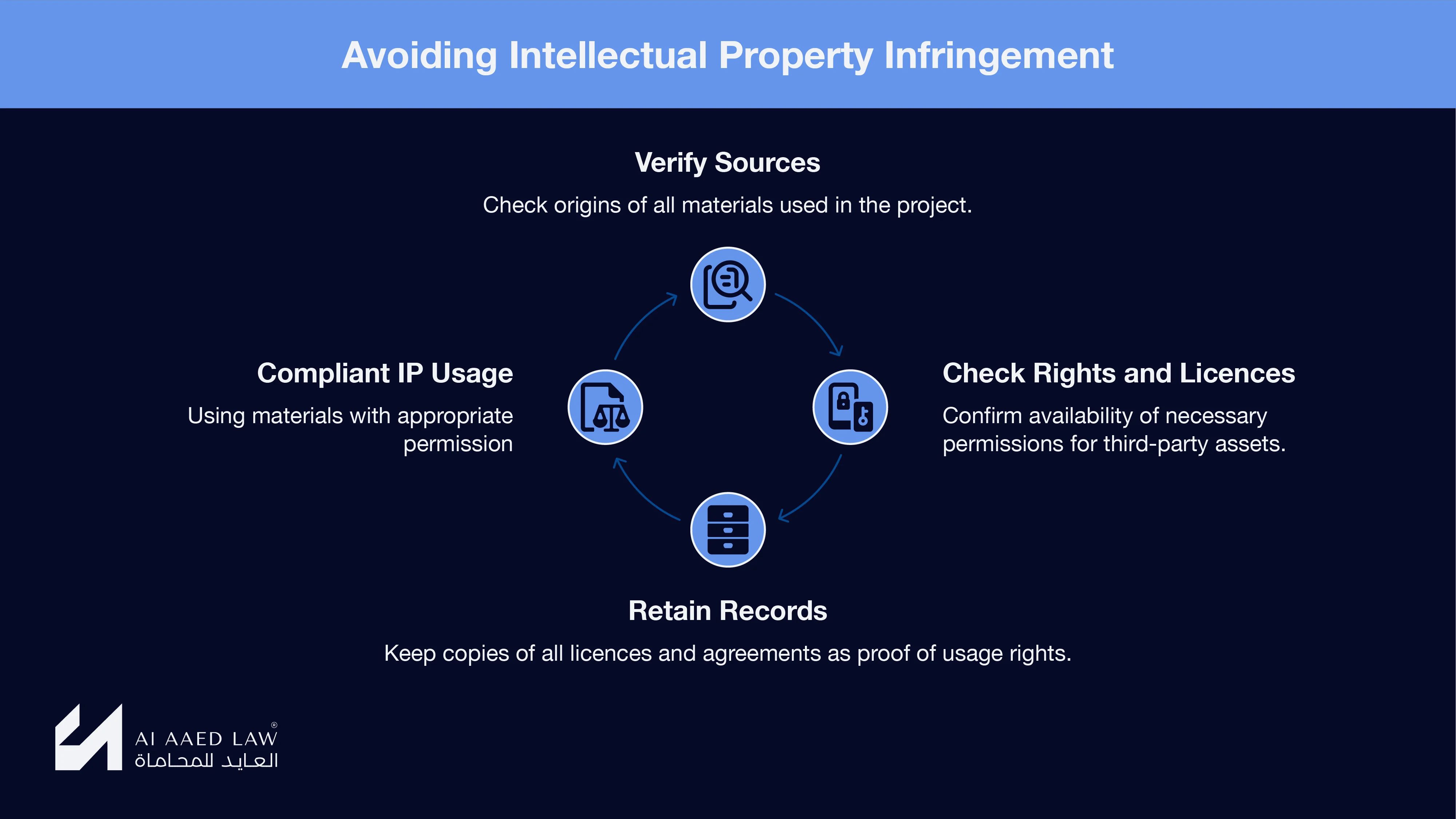
Intellectual property protection is not only about preventing others from using the company’s assets. Businesses should also ensure that they do not use intellectual property belonging to third parties without appropriate permission.
Before launching a brand, design, marketing campaign, or digital product, companies should verify the sources of the materials being used and the rights or licences available. Records of licences and agreements should also be retained to demonstrate the company’s right to use materials it did not create itself.
The Role of a Lawyer in Protecting Intellectual Property Rights
An intellectual property lawyer can help a company identify intellectual assets requiring protection and determine an appropriate legal strategy for each asset. This may include reviewing trademarks, registrations, commercial agreements, licensing arrangements, confidentiality provisions, and transfers of intellectual property rights.
Legal review can also identify gaps in ownership, particularly where a company relies on employees, freelancers, developers, agencies, or other external parties to create its products, technology, designs, or content.
How Can Intellectual Property Rights Be Organised Within a Company?
A company can begin by creating an inventory of important intellectual assets, identifying the owner of each right, documenting how it was created, and determining whether it has been registered or requires registration.
Employment agreements, freelancer contracts, supplier arrangements, and partnership agreements should then be reviewed to ensure that ownership, permitted use, confidentiality, and transfers of rights are clearly addressed. Maintaining central records of registrations, licences, contracts, and renewal dates can also make ongoing intellectual property management more effective.
This article is provided for general information only and does not constitute legal advice. For advice on a specific matter, contact AL AAED Law Firm.
Official source: Syrian Ministry of Finance